
Case Study: Heuristic Evaluation of the IFSolve Platform
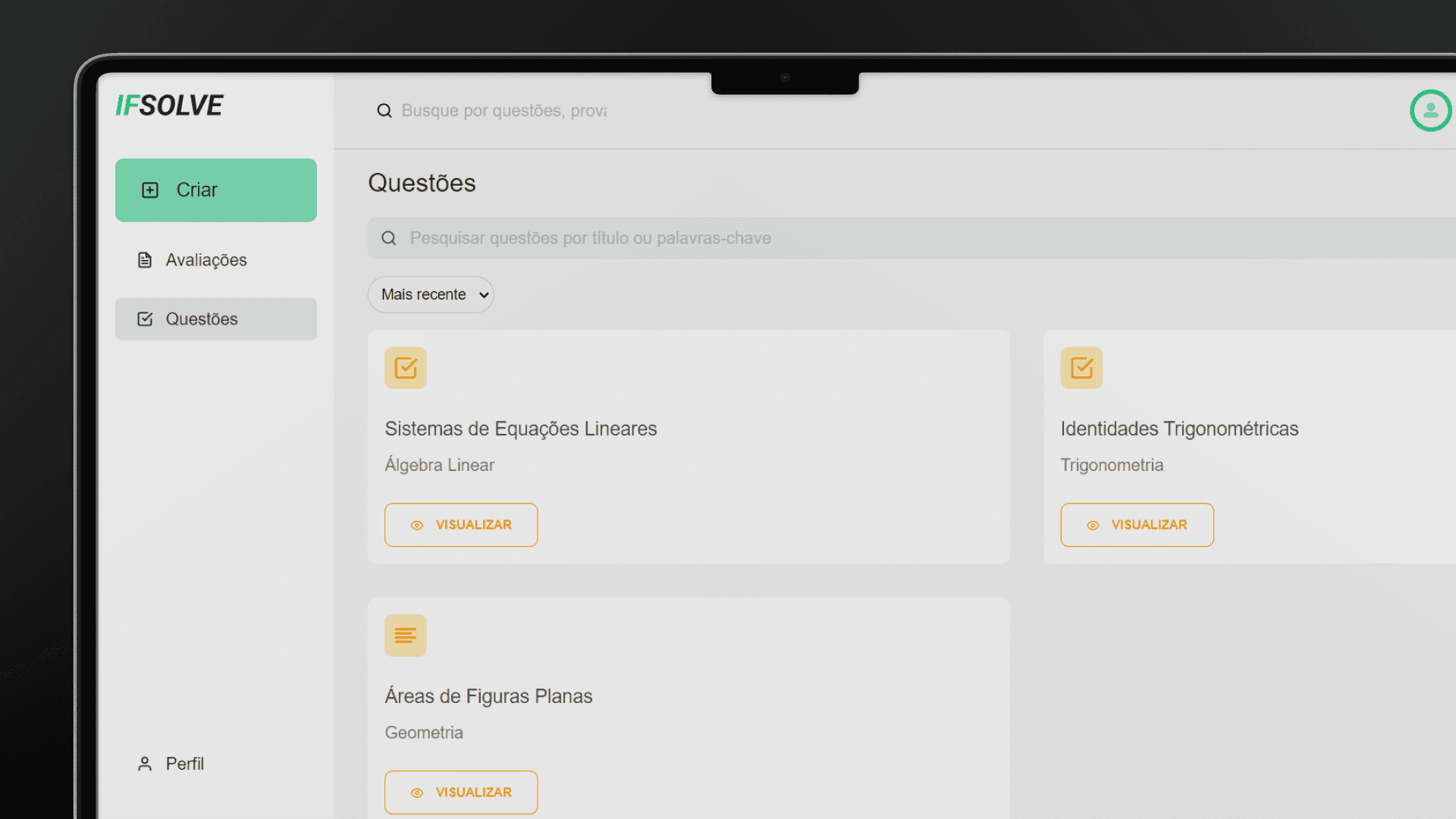
This case study presents an in-depth analysis of the IFSolve platform's interface through a heuristic evaluation, a technique widely used to identify usability issues. The aim of this study was to assess the system's compliance with usability guidelines and propose solutions for any violations found.
Methodology
A qualitative analysis was conducted on the IFSolve system interface using the heuristic evaluation method. This approach was chosen to systematically uncover interface problems and inefficiencies. The evaluation sought to verify how well the platform's elements and functionalities adhered to established usability principles. Each issue identified was classified according to its severity, categorized as light, moderate, severe, or critical, depending on the impact the violation would have on the overall user experience.
Light
Moderate
Severe
Critical
Heuristic Evaluation
Heuristics are principles used to guide the design and evaluation of user interfaces. These principles, often referred to as best practices, are developed by usability experts to ensure the creation of efficient, effective, and user-friendly systems. Heuristic evaluation is a systematic inspection method where experts assess an interface based on a set of predefined heuristics, as outlined by Nielsen (1994).
During the heuristic evaluation of IFSolve, the experts focused on aspects such as navigation, feedback, consistency, and error prevention. Each usability issue was analyzed with reference to usability principles, including well-known heuristics like Nielsen’s 10 Usability Heuristics. As problems were identified, they were not only classified by severity but also paired with suggested improvements grounded in the principles violated. This approach aligns with the purpose of heuristic evaluation: to provide clear insights into usability problems and motivate new design proposals that enhance user interaction. As Nielsen (1994) and other experts such as Benyon (2010) and Preece, Rogers, and Sharp (2012) suggest, the heuristic evaluation process serves as an effective means to detect issues early, ensuring a more user-centric interface design.
Conclusion
The evaluation of the IFSolve platform revealed a range of usability problems, but the number and nature of issues identified were influenced by the subjective experiences of the evaluators. This subjectivity underscores the importance of diverse perspectives in usability evaluations, as different individuals may perceive and prioritize problems differently. Thus, future evaluations conducted by other experts could potentially reveal additional issues not found in this analysis.
While the guidelines significantly aided the evaluation process, there were challenges in determining the severity of some issues. The classification of these problems could benefit from further refinement, particularly in providing clearer definitions of severity levels. This would enhance the objectivity and consistency of evaluations, ensuring more accurate and actionable results. Future research could explore this aspect in more detail, aiming to create a more standardized approach to problem classification in heuristic evaluations.
By following a rigorous methodology and leveraging established usability principles, this study contributes to the ongoing improvement of the IFSolve platform, ultimately enhancing its usability.